- [BRAND] Certified
- Lifetime Warranty
- Book Online in 60 Seconds
- 2,000+ Cars Tinted

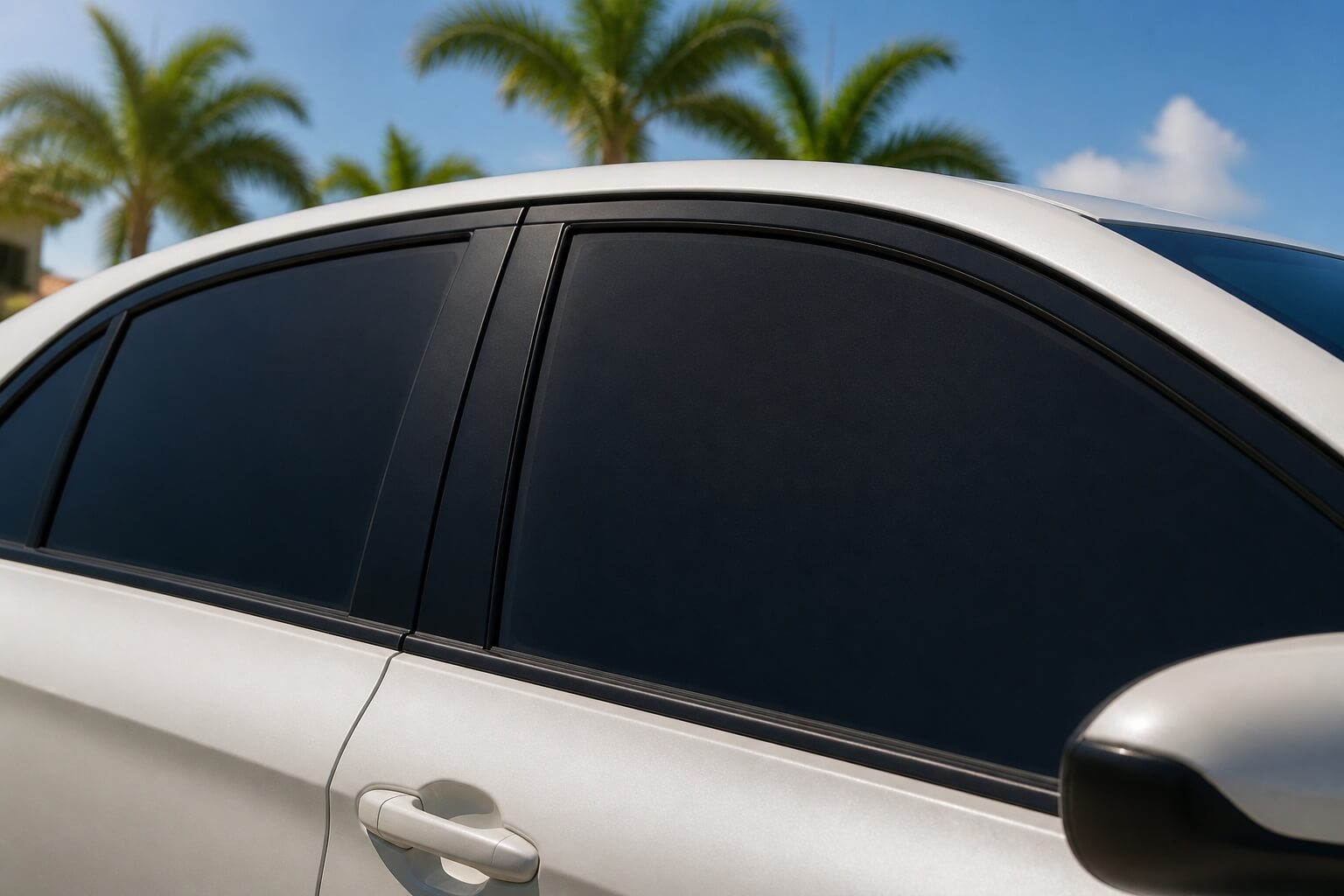
Real step up from dyed tint
Dashboards, leather, skin
No metal in the film
No dye to break down
UV protection, good heat rejection, and a stylish matte finish.
UV is the cause of dashboard cracks, faded leather, and sunburn on a long drive. Carbon tint handles this as well as anything, even ceramic.
This is the performance you can expect to receive. Dyed tint runs at around 15%, ceramic as much as 80%. It’s a real step up from dyed without the cost of ceramic.
Carbon is non-conductive, so there is no interference with phones, GPS, keyless entry, and so on.
When we talk about carbon today, it can refer to two types of film, and they are very different products. The problem is, many tint shops will just say carbon, and never explain which one they mean. You really need to know, because the cheap version and a premium carbon tint are not the same at all, so you should always ask.
| Standard Carbon | Nano-Carbon Hybrid ★ Better Heat | |
|---|---|---|
| Infrared rejection | ~40% | Up to 78% |
| UV blocked | 99% | 99% |
| Finish | Matte black | Matte black |
| Signal interference | None | None |
| Florida lifespan | 3–5 years | 5–7 years |
We fit more partial tints with carbon that we do with ceramic tint; here are the options you have:
SUVs have more glass than a sedan
Front 2 is cheapest, whole vehicle the most expensive
Hybrid costs more, but is much closer to ceramic performance
If there is tint already fitted, we have to remove it
Takes longer to fit and get good results
While carbon comfortably outlasts dyed tint, which can start to degrade in months under the Florida sun, it cannot compete with ceramic.
The Florida sun is harder on tint film than pretty much anywhere else in the country, so don’t look at average lifespans. This is the real-world results you can expect. You will likely replace carbon 3 times during the life of a ceramic tint.
One fit and forget about it. Over those 10 years, 3 carbon installs will cost more than one ceramic, so which one is really the cheaper option?
We want to sell you the right film, not the most expensive one.
The shade of tint you want and the quality of the film used are two separate things. An almost clear shade of ceramic tint will still reject 80% of heat, because it is the ceramic doing the work, not the color. The shade of tint is mostly about privacy, what is allowed under Florida law, and how much night driving you do.
Nearly clear
Looks essentially clear. Legal anywhere, including the windshield. Popular with drivers who want heat gone without the tinted look.
Barely visible
Barely visible tint. Cuts glare noticeably.
Light
Light, clean, legal on front sides. Easy for night driving.
Darkest legal front
The darkest legal front side shade in Florida. Common choice.
Privacy
Rear glass only on a sedan. Strong privacy.
Deep privacy
Rear glass only on a sedan.
Limo dark
Rear glass on SUVs, vans and trucks only.
28% on the front sides, 15% or 20% on the rear, which looks great and stays legal on your sedan. It can go even darker on the rear if you have a truck or SUV.
Four specific reasons, not four marketing promises.
Definitely not. Each type -dyed, carbon, metalized, and ceramic- all offer different levels of protection, lifespan, and other properties. Take two types of film at the same darkness, and they will give vastly different performance.
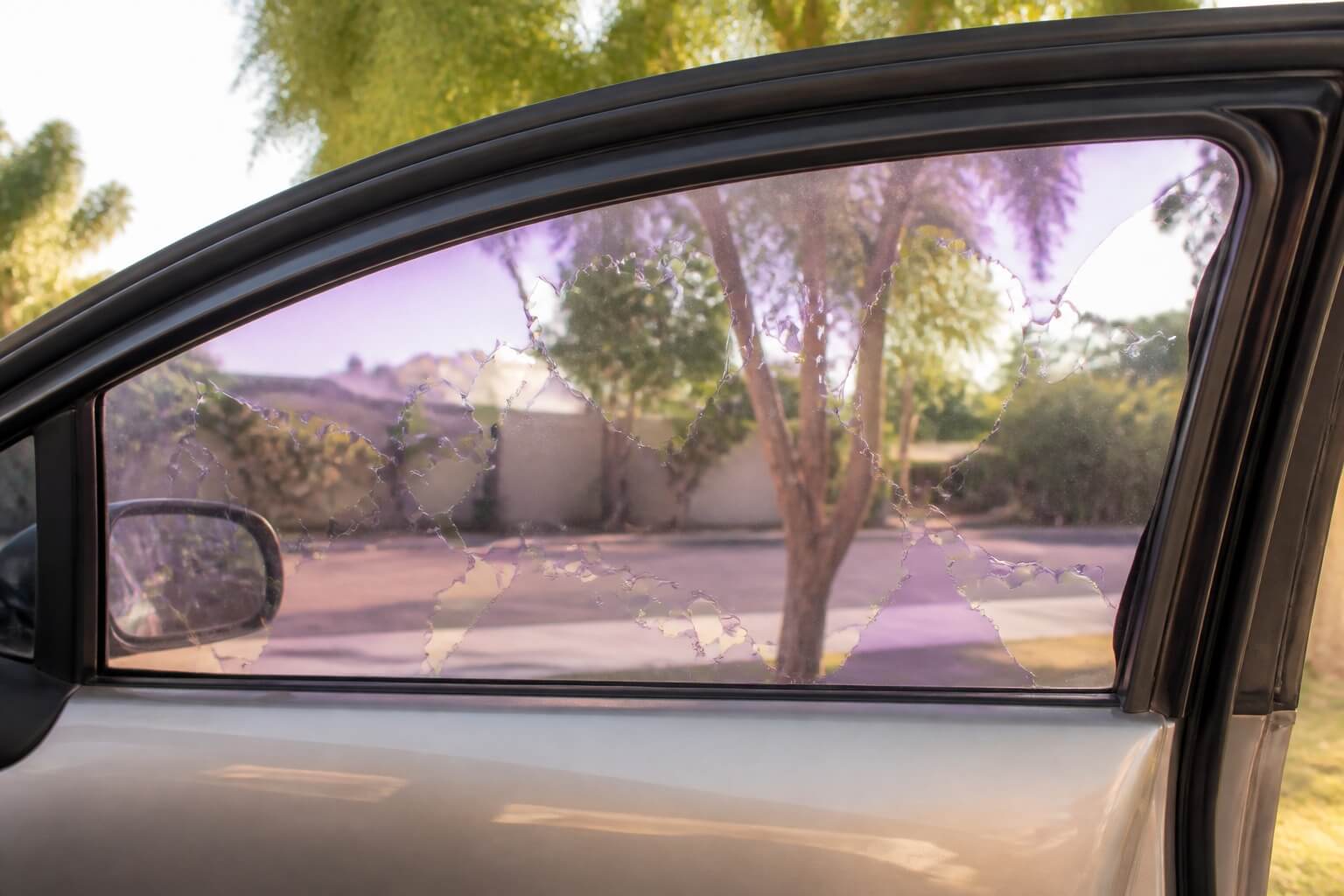
No. Dyed film fades into a purple color as it degrades under UV; carbon has no dye in it to fade at all. Color stays consistent throughout the life of a carbon tint.
Carbon comes in all shades, including nearly clear. Whatever the shade, you still get all the UV and heat-blocking performance.
No. Bubbles are usually a symptom of contamination on the glass when fitting, or a rushed install. You may see some small water pockets immediately after install, but they will disappear on their own within the first couple of days. If you see an issue after a week, we’ll take care of it for you.
If heat is the problem because your car is left outside all day, then ceramic is a great choice. It rejects about twice as much heat as carbon, and lasts three times as long. It's more expensive to fit, but will save money over a decade.
We only fit [BRANDNAME] carbon film. Our service, from professional installers, precision-cut film to fit your vehicle, and warranty against bubbling, peeling, cracking, and color change are the same as you get from our ceramic option. Just the film and the price change.
4 Steps from beginning to Privacy; here’s what we do:
Trim and panels prepped. Glass cleaned inside and out, including under all seals.
Patterns are plotted for your exact make and model, and year of vehicle for a perfect fit with no need for cutting on the glass.
Rear glass film heat-shrunk to the curve before installation for a tight, seamless finish.
Most vehicles are completed in a few hours. After that, you must leave the windows up for a few days to allow the adhesive to fully cure. You may see hazing or water pockets; this is perfectly normal and will dissipate.
Four specific reasons, not four marketing promises.
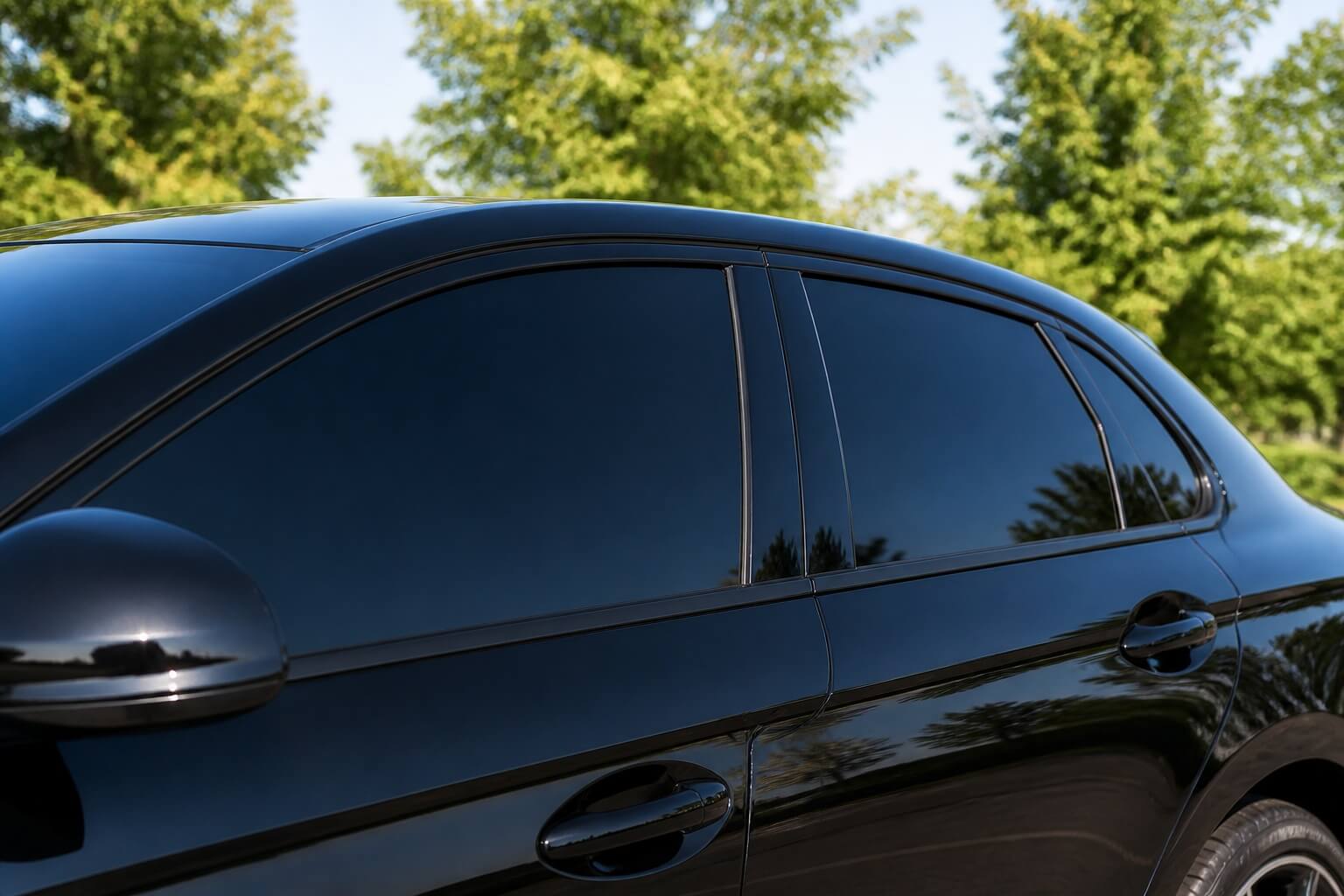
Original photography from our bay — every car we show is one we tinted.
Honest words from the people who know Riverview best — our drivers.

Everything you need to know before you get started.
The exact price depends on the vehicle size, the number of windows, and whether there is existing tint to remove. Send us the exact model, make, and year, and photos of existing film, if any, and we’ll give you an exact quote for the work.
Between three and five years for standard carbon, and five to seven years for nano-carbon film. This is lower than the average time usually quoted, because Florida is one of the harshest environments for tint, and they degrade faster here than elsewhere.
No, that is dyed film. UV breaks down the dye over time, causing the blue pigment to fade first, leaving a purple appearance of the film. Carbon has no dye and stays the same color throughout its life.
It depends. Standard carbon film rejects around 40% of solar heat, which is around three times more than dyed tint, so a difference you can feel. However, if the vehicle is left out in the sun all day, it will still get hot inside over time, and compared to ceramic, which stops 80% of heat, the difference is really noticeable. If your vehicle is kept out of the sun, carbon will cope just fine.
No. There is no metal in the carbon film at all, and phone signal interference comes from metalized film.
Nano-carbon is a film that uses much finer carbon particles than standard, which helps increase infrared rejection, up to as much as 78% compared to standard’s 40%. It also has an extended lifespan over standard, and although more expensive than standard, remains significantly cheaper than ceramic, despite getting close to its performance. It’s a good choice if the vehicle is kept outside, but ceramic is too expensive.
Not really. You can have carbon film in a variety of shades, from almost clear to as dark as is legally allowed. You can do the same with ceramic too. Film type and shade are 2 different things.
We don’t recommend doing that. The two have different finishes that can clearly be seen from the outside, and it looks odd. In general, if ceramic is beyond your budget, stick with all carbon.
28% VLT on the front side for all vehicle types. Rear glass depends on the vehicle. 15% for sedans, 6% on an SUV, van, or truck.
No. The old film must be removed first, or the new one will not adhere properly otherwise.
Let us know the year, make, and model of vehicle, which windows you want tinting, and if you need any old film removed, and we’ll get back to you with a quote. We always quote carbon and dyed film side by side, so you can make the choice that suits you best.