- Honest Pricing
- Professional Install
- Free Shade Consultation
- 2,000+ Cars Tinted

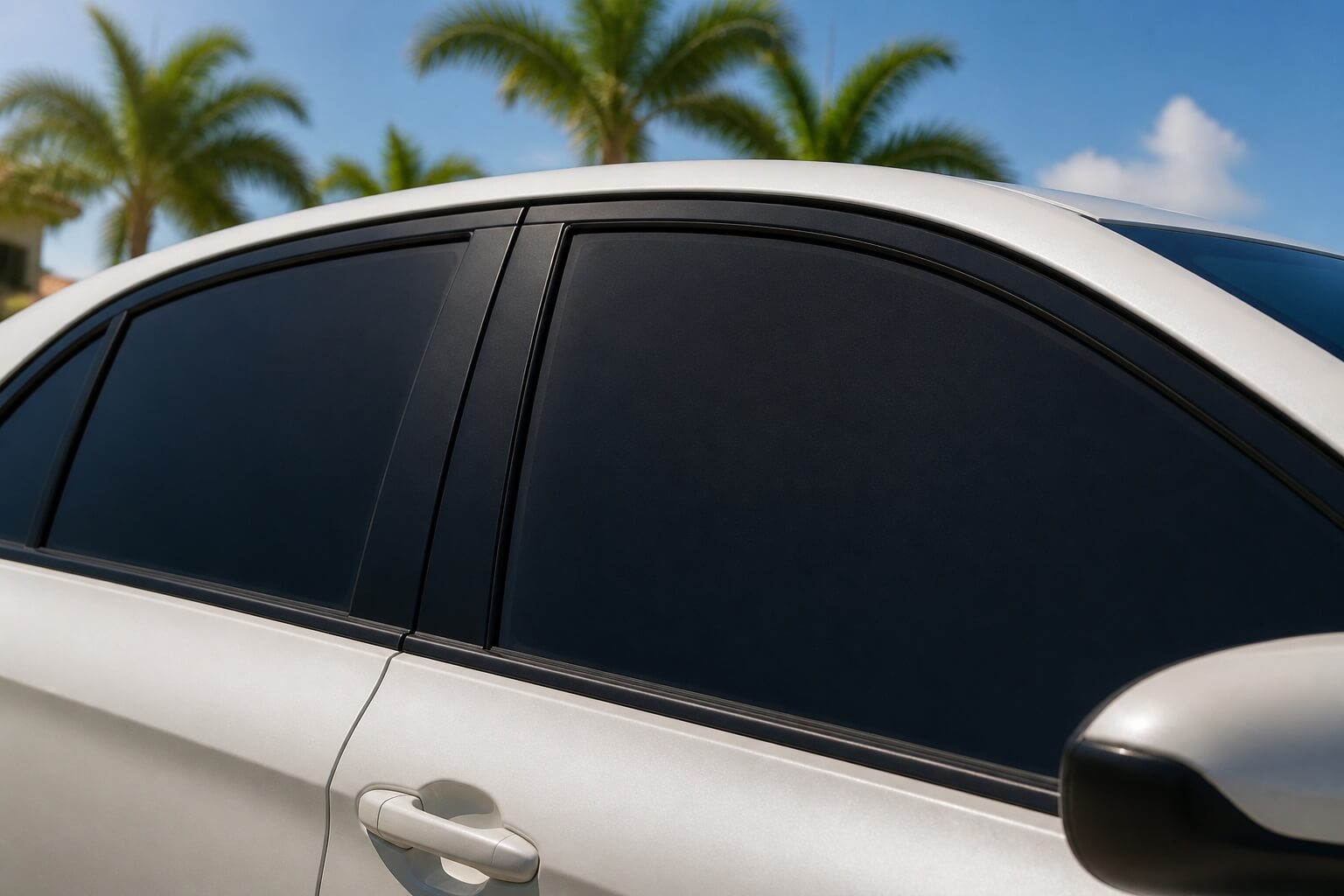
This is why you choose dyed film.
It's OK, but not great, and its reality in Florida
This can help on longer drives to avoid eyestrain.
The big downside. You’ll be replacing it in a couple of years.
Privacy and glare reduction with limited heat rejection. The reality tells the story.
A 15% or 20% tint gives the classic tinted look, real privacy, and style all at the lowest price possible. This is the thing it does so well.
While 15% reduction sounds OK, carbon can manage 40%, and ceramic as much as 80%. This is because dyed film does block light, but it does not stop UV. This is what warms your vehicle, and in practice, while a dye-tinted vehicle left in the midday sun in Riverview might be a little cooler than a non-tinted one, that difference is small.
Eyestrain on a longer drive, general visibility on any journey, reducing glare is always useful. Other options can do the same, but if budget means dyed, it is nice to have.
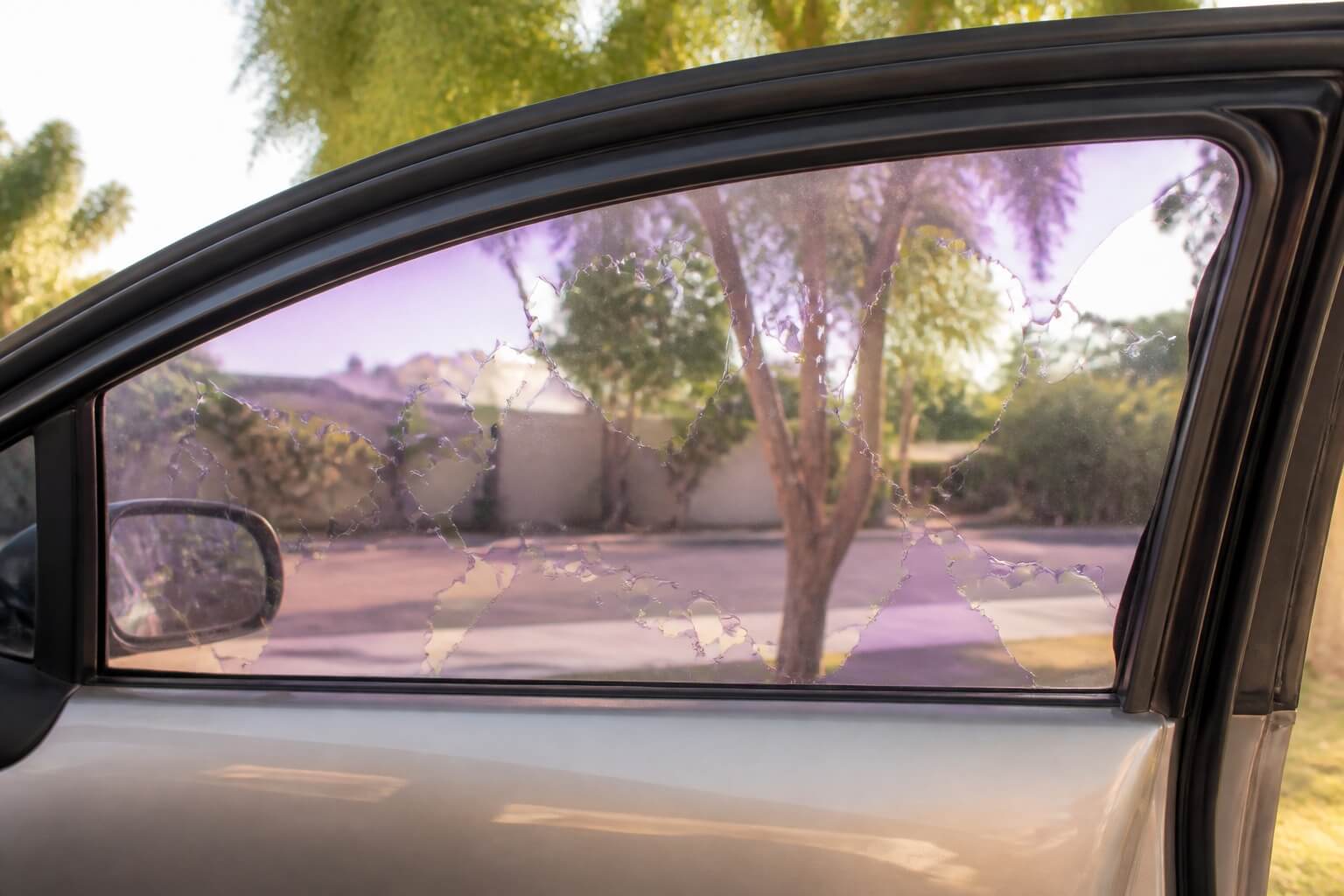
Purple fading, bubbling, and the cost of removal. The honest truth about living with dyed tint others won’t explain.
In general, most manufacturers will claim between 2 and 4 years of lifespan for dyed tint film. In Florida, though, where we have a larger UV load than pretty much anywhere else in the country, consider 2 years to be an optimistic lifespan.
The thing about budget tinting that no one mentions is not just that cheaper tint degrades very quickly in Florida. It's that you then have to pay to have it removed. Purple, bubbling, brittle film is slow to remove, and an entirely manual job. No automation, no shortcuts, just time and patience.
We’ll take it off and install something that will last instead.
As the least expensive tint option we offer, the cost of dyed is still affected by the same things as our other options.
SUVs have more glass than a 2-seater convertible, and more glass means more work.
Front two, all side windows, rear or whole vehicle, it matters.
If there is already film on the glass, it must be removed before applying any new tint. This can take longer than the new install, depending on the condition.
The removal cost you are creating for yourself in two or three years, and the replacement after it. The lifespan section above covers why that matters more with dyed than with anything else.
Dyed film carries a limited manufacturer warranty or none at all. Carbon and ceramic carry lifetime warranties against bubbling, peeling, cracking and color change. That difference is not visible in a price comparison.
Dyed tint is not for everyone, but it may be the perfect choice for you; here’s how to know.
Carbon or Ceramic window tint. Elevate your vehicle.
No dye, so it can never turn purple. Offers around 40% heat rejection rather than the 15% of dye, lasts for 3 to 5 years in Florida.
With over 80% heat rejection, a lifetime warranty, and lasting for over 10 years, ceramic is the best solution for keeping your vehicle cool even if it's out in the Riverview sun.
Dyed film has a flatter, more opaque appearance compared to carbon or ceramic films of similar VLTs. You may prefer that look, but it's worth seeing them all before choosing.
Barely visible
Cuts glare, minimal privacy. Legal anywhere.
Light
Light, clean. Legal on front sides.
Darkest legal front
The darkest legal front side shade in Florida.
Privacy
Rear glass only on a sedan. Strong privacy.
Deep privacy
Rear glass only on a sedan.
Limo dark
Rear glass on SUVs, vans and trucks only.
28% on the front sides with 15% or 20% on the rear gives a graduated look and stays legal on a sedan. On an SUV or truck the rear can go darker.
This is the key issue for degraded dyed film, and why it needs replacing so quickly.
Over time, UV will degrade the pigment that provides the tint in the film. It doesn’t fade evenly, with the blue part of the dye affected first, causing purple coloring. It's an issue with the material itself and cannot be fixed.
As the adhesive loses its grip on the glass, air finds its way between the tint and the window, causing bubbles. It starts slowly on the edges, but quickly accelerates and moves towards the middle of the glass. This cannot be fixed either, and requires total replacement.
We can remove your old film and replace it the same day for most vehicles. Choose carbon or ceramic films and never see bubbling or purple fringing again.
4 Steps from beginning to Privacy, here’s what we do:
Trim and panels prepped. Glass cleaned inside and out, including under all seals.
Patterns are plotted for your exact make, model, and year of vehicle for a perfect fit with no need for cutting on the glass.
Rear glass film heat-shrunk to the curve before installation for a tight, seamless finish.
Most vehicles are completed in a few hours. After that, you must leave the windows up for a few days to allow the adhesive to fully cure. You may see hazing or water pockets; this is perfectly normal and will dissipate.
Four specific reasons, not four marketing promises.
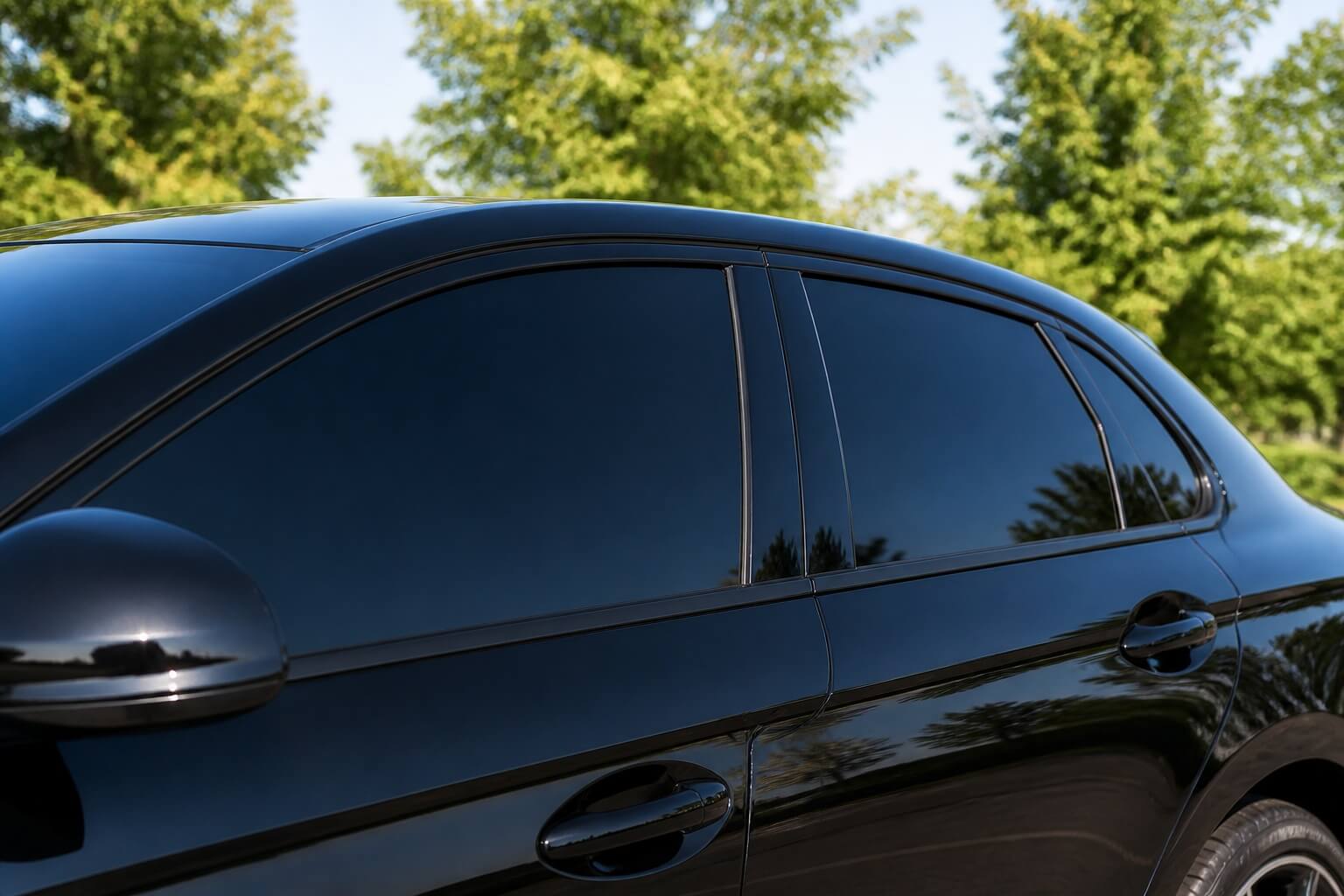
Original photography from our bay — every car we show is one we tinted.
Honest words from the people who know Riverview best — our drivers.

June 2026
June 2026
June 2026
Everything you need to know before you get started.
Dyed tint is our least expensive option, but the exact price depends on the vehicle size, the number of windows, and whether there is existing tint to remove. Send us the exact model, make, and year, and photos of existing film, if any, and we’ll give you an exact quote for the work.
At most three years, and usually a lot less. Florida’s UV load is one of the highest in the country, meaning that dyed film will degrade faster here than national averages. Cheap, single-ply films can begin to degrade in a matter of months.
UV breaks down the dye over time. It causes the blue pigment to fade first, leaving a purple appearance of the film.
A little. Figures suggest it can block around 15% of solar heat, which is much less than the 40% of carbon, or 80% that ceramic manages.
Not as reliably as alternatives. Some dye film claims high UV resistance. However, as the dye breaks down, so will that protection, and that can happen in just months in Florida.
If you are going to swap tints frequently, such as a rideshare or delivery driver, if you are selling a vehicle soon and just want something to look nice in photos, or if you have a vehicle on a short lease, then yes, it makes sense. For anything long term, both carbon and ceramic film offer a better solution.
It can during removal. If the adhesive fails, it may not release properly and cause breaks in the defroster lines. This is the hidden cost of budget film.
Yes, and we offer a same-day service for most vehicles. Just let us know the make, model, and year of vehicle, and a photo of the tint, and we’ll provide an accurate quote in return.
No. There is no metal in the dyed film at all, and phone signal interference comes from metalized film.
28% VLT on the front side for all vehicle types. Rear glass depends on the vehicle. 15% for sedans, 6% on an SUV, van, or truck.
Let us know the year, make, and model of vehicle, which windows you want tinting, and if you need any old film removed, and we’ll get back to you with a quote. We always quote carbon and dyed film side by side, so you can make the choice that suits you best.